
hdbw-hochschule.com  Study Programmes Professors & Lecturers Prof. Dr. Stefan Pasch - Professor at HDBW
HDBW-PROFESSOR DR. STEFAN PASCH: ACADEMIC PROFILE
Here you can learn more about the backgrounds and academic profiles of HDBW professors and lecturers: what they studied themselves and which professional experiences they bring with them from outside the university.
Some also share their personal teaching philosophy, list their academic publications, or highlight special areas of interest — professionally or even privately.
Position at HDBW
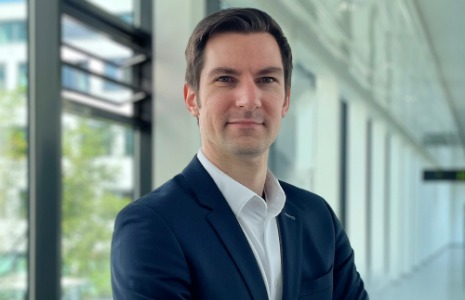
Professor of Business Informatics
Courses Taught:
Methods of AI | Big Data in Practice | Introduction to Business Informatics | Introduction to Knowledge and Information Management
Research Areas
Human-AI Interaction, AI Governance, Ethical AI, Natural Language Processing (NLP), Big Data Analytics
Professional Career
Since 2026: Hochschule der Bayerischen Wirtschaft (HDBW), München
Professor of Business Informatics
2024 – 2026: Hankuk University of Foreign Studies, Seoul
Postdoctoral AI Researcher
2024: Boston Consulting Group Platinion, Frankfurt am Main
IT Consultant
2020 – 2024: SVA, Wiesbaden
Data Scientist
2015 – 2020: Goethe-Universität Frankfurt am Main
Research Assistant
Studies
2018 – 2020: Goethe University Frankfurt
Dr. rer. pol. (PhD) in Quantitative Management (summa cum laude)
2014 – 2018: Graduate School of Economics, Finance, and Management (GSEFM)
Master of Science in Quantitative Management
2011 – 2014: Goethe University Frankfurt
Bachelor of Science in Economics and Business Administration
Awards
- European Statistics Award (Eurostat) - Web Intelligence, Reproducibility Award: 1st place (team)
- ACM Financial Data Science Competition (sponsored by J.P. Morgan) - Financial Relation Extraction Challenge: 1st place (team)
Publications
- Pasch, S., & Cha, M. C. (2026). Do ethical AI principles matter to users? A large-scale analysis of user sentiment and satisfaction. Telematics and Informatics, 102381.
- Pasch, S. (2026). LLM content moderation and user satisfaction: Evidence from response refusals in Chatbot Arena. Behaviour & Information Technology, 45(10), 2007-2031.
- Pasch, S., & Ha, S. Y. (2026). Human–AI interaction and user satisfaction: Empirical evidence from online reviews of AI products. International Journal of Human–Computer Interaction, 42(7), 5570-5591.
- Pasch, S., Lee, S., & Cha, M. C. (2026). Exploring UX dimensions and experience-levels in VR gaming: insights from online reviews using transformer models. International Journal of Human–Computer Interaction, 42(4), 2247-2261.
- Jung, S., Han, S., Yoo, G. Y., Pasch, S., Ji, Y. G., Kim, H., & Cha, M. C. (2026). Uneven by design: How generative AI interfaces reinforce digital divides across modalities. International Journal of Human–Computer Interaction, 1-32.
- Kang, H., Pasch, S., & Cha, M. C. (2026). Understanding the temporal dynamics of user experience in VR gaming: Evidence from large-scale game reviews. Computers in Human Behavior, 109158.
- Pasch, S., & Cha, M. C. (2025). Balancing privacy and utility in personal LLM writing tasks: An automated pipeline for evaluating anonymizations. Proceedings of the Sixth Workshop on Privacy in Natural Language Processing (PrivateNLP), NAACL 2025.
- Pasch, S., & Cutura, J. (2024). Text classification with limited training data: Suicide risk detection on social media. IEEE International Conference on Big Data (BigData) (pp. 8560-8565). IEEE.
- Koch, S., & Pasch, S. (2023). CultureBERT: Measuring corporate culture with transformer-based language models. IEEE International Conference on Big Data (BigData) (pp. 3176-3184). IEEE.
- Cutura, J., & Pasch, S. (2023). Breaking the U: Asymmetric U-Net for object recognition in muon tomography. IEEE International Conference on Big Data (BigData) (pp. 6069-6075). IEEE.
- Heinz, M., Friebel, G., Pasch, S., & Sabet, N. (2023). The 30 Years' War and violent crime in the late 19th century. Journal of Economic Behavior & Organization, 208, 191-202.
- Pasch, S., & Ehnes, D. (2022). NLP for responsible finance: Fine-tuning transformer-based models for ESG. IEEE International Conference on Big Data (Big Data) (pp. 3532-3536). IEEE.
Our Students Recommend Us

Who better to evaluate a degree programme than the people who experience it every day? On StudyCheck, our students share their experiences and reviews of studying at HDBW. Their feedback offers prospective students authentic insights into student life at our university.